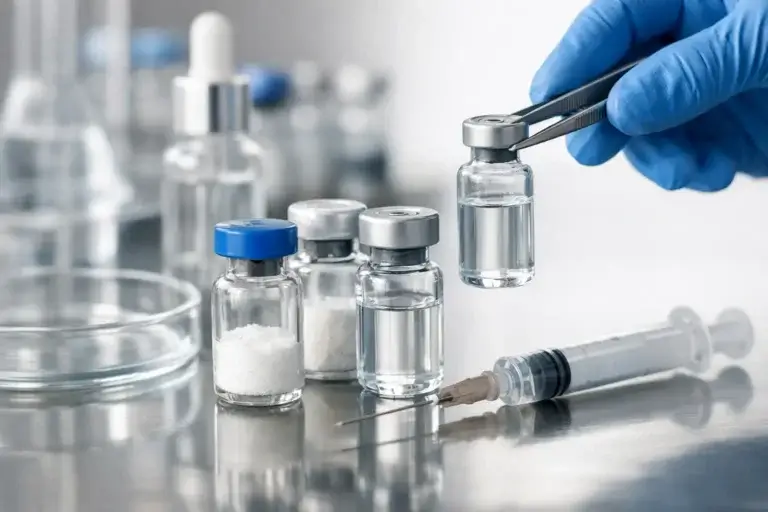

How to Handle Lyophilized Peptides for Research
A lyophilized peptide vial may look like a simple finished material: a sealed container holding a dry cake, film, or powder. In practice, its condition reflects a chain of controls that begins before it reaches the laboratory. Knowing how to handle lyophilized peptides means protecting identity, traceability, and material integrity from receipt through final research use.
For qualified research buyers, this is not a matter of convenience. A vial can be analytically strong at release yet become unsuitable for a given protocol if its documentation is separated, its storage history is unknown, or its contents are exposed to avoidable moisture, heat, or repeated handling. The appropriate standard is disciplined control, not assumption.
All peptide compounds discussed here are Research Use Only. They are not intended for human consumption, diagnostic use, therapeutic use, or use as drugs, supplements, or medical devices.
Begin With Receipt Verification
The first handling decision occurs when the shipment arrives. Before placing a vial into storage, confirm that the item received matches the purchase record and the requirements of the intended research work. Verify the compound name, vial label, lot or batch identifier, stated quantity, and accompanying documentation. If a certificate of analysis is provided, retain it with the receiving record rather than treating it as disposable shipping material.
Visual inspection is equally useful, but it has limits. Confirm that the vial and closure appear intact and that no obvious shipping damage, compromised seal, or unlabeled secondary packaging is present. A dry peptide can vary in appearance by sequence, formulation, fill format, and manufacturing process. Appearance alone cannot establish identity or purity, so it should support – not replace – lot-level documentation and analytical verification.
If there is a discrepancy, quarantine the material from active inventory until it is resolved. Do not relabel an uncertain vial from memory or transfer it into a working container before the chain of identity is established. That shortcut creates a preventable traceability failure.
Control Storage Before Opening
Lyophilization improves stability by removing water, but it does not make a peptide indifferent to its environment. Storage conditions should follow the product label, supplier documentation, and the requirements established by the laboratory’s stability program. Temperature, moisture, light exposure, and time outside controlled storage can all matter, and their relative significance depends on the specific peptide and research design.
Keep unopened vials in their original packaging whenever practical. Original packaging supports label retention, helps limit unnecessary light exposure, and preserves the connection between the vial and its batch information. If secondary containment is used, label it clearly enough that the compound, lot, receipt date, and storage location can be reconciled without opening the container.
Avoid treating a general freezer or refrigerator as a complete storage strategy. The relevant question is whether the unit maintains the specified condition consistently and whether access events are controlled. A unit with frequent door openings, poorly documented temperature performance, or mixed-use contents can introduce more uncertainty than researchers expect.
For long-term retention, establish a written inventory practice. Record the storage condition, exact location, lot identifier, quantity or vial count, date received, and responsible person or group. This record makes it possible to assess material history later, especially when a project extends across months or changes hands.
Minimize Moisture and Unnecessary Exposure
The dry state is part of what makes lyophilized material manageable. Once a vial is opened, it is more vulnerable to ambient moisture and handling variation. Prepare the workspace before accessing the vial so that it does not remain open while personnel search for labels, records, equipment, or protocol details.
Use laboratory practices appropriate to the compound, the procedure, and the facility’s safety requirements. This generally means clean working surfaces, suitable personal protective equipment, clearly identified containers, and deliberate prevention of mix-ups. It also means avoiding any handling method that could compromise the stopper, introduce contamination, or obscure the original vial information.
Repeated access deserves special attention. Each access event can increase opportunities for moisture ingress, material loss, or identity error. Where research planning permits, select vial sizes and workflow arrangements that reduce repeated manipulation. The right approach depends on the expected use frequency, required analytical precision, and whether the work involves a single study or multiple controlled experiments.
Plan Reconstitution as a Validated Research Step
Reconstitution is not a generic instruction that can be safely copied from one peptide to another. Solubility, solution stability, compatibility, concentration requirements, and analytical goals vary by peptide sequence and by study design. The solvent system and handling parameters should be defined by the laboratory’s validated method, the applicable protocol, and qualified technical review.
Before reconstitution, confirm the vial’s identity one more time against the working record. Document the compound, lot, date, operator, intended concentration, solution vehicle, and any relevant method reference. If the study requires high-confidence material characterization after preparation, include the appropriate analytical checkpoints rather than relying solely on calculations.
Do not infer suitability for a particular solvent or research application from a product name, a forum discussion, or an unrelated peptide protocol. A label stating a mass and purity value does not substitute for method development. The material’s certificate of analysis establishes release information for the stated lot; it does not validate every downstream preparation or experimental condition.
Once prepared, treat the solution as a new controlled research material. Its stability window may differ substantially from the dry material, and its container, storage condition, concentration, and exposure history can influence experimental reliability. Assign a distinct preparation record and label that connects the solution directly to the source vial and lot.
Preserve Documentation With the Material
High-purity material is only as useful as the records that support it. For research buyers, documentation should remain connected to the physical vial, not stored as an isolated file that cannot be reliably matched later. At minimum, the laboratory should be able to answer what the material is, which lot it came from, how it was stored, when it was accessed, and what occurred after preparation.
A controlled record system also protects against a common problem in small research environments: the unlabeled “known vial.” A container may be familiar to one individual but unusable to anyone else once the original context is gone. Clear records reduce dependence on memory and make internal review more defensible.
Ember Peptides approaches product integrity through Purity ≥99%, third-party testing, vial-level verification, and certificates of analysis. Those controls provide a strong starting point at procurement. Laboratory handling must maintain that standard of discipline after receipt.
Separate Research Controls From Product Claims
Researchers should distinguish between verified release specifications and claims created by downstream use. A third-party-tested lot can support confidence in the identity and purity information supplied for that lot. It does not establish safety, efficacy, dosing, therapeutic suitability, or fitness for human use.
This distinction is central to Research Use Only compliance. Store, document, and use peptide compounds within legitimate laboratory, analytical, educational, or preclinical research settings. Do not represent RUO materials as approved drugs, supplements, medical devices, or diagnostic products. Purchasers remain responsible for ensuring their intended use, facility procedures, and documentation practices meet applicable requirements.
When to Quarantine a Vial
Quarantine is a quality decision, not an overreaction. Set material aside when the label cannot be reconciled with the receiving record, the vial appears damaged, the closure integrity is uncertain, storage conditions were not maintained, or documentation is missing. The same applies when an unexpected appearance is observed after preparation or when a sample history cannot be confirmed.
The next step depends on the research program. It may involve contacting the supplier with the order and lot details, reviewing internal handling records, or performing appropriate confirmatory analysis. What should not happen is silent return of uncertain material to active inventory because the vial is expensive or the study timeline is tight.
Careful peptide handling is ultimately a discipline of preserving evidence. Keep the vial identified, keep its conditions controlled, keep the records attached, and let validated research methods – not convenience – determine what happens next.